


5 games that will change your perspective on life
Studios Campo Santo, Giant Sparrow, Mobius Digital, and DigixArt have us thinking about how we move through the world


What separates games from other forms of media is the control they give the player. Because the player has to perform the actions themselves, these games can make difficult subjects feel less distant than they would in other mediums.
These particular games are built on choice-based frameworks that resemble the lived reality of facing antagonistic systems and finding community in the margins. By relying on player agency and interactive mechanics, these five indie games overcome emotional barriers, inviting players to actively construct their own sense of meaning around mortality, grief, isolation, and political freedom.
[Editor's note: This article contains story spoilers for each of the games in the list.]
Inherited trauma & grief in What Remains of Edith Finch

Where to play: iOS, Nintendo Switch, PlayStation, Windows, Xbox
Content warning: This section includes descriptions of death, suicide, infanticide, and familial abuse.
Every Finch member has died differently, but they live forever through the family curse preserved in Giant Sparrow’s What Remains of Edith Finch. It’s an interactive anthology of 13 stories that follow Edith, after her mother’s death, to her abandoned and allegedly cursed ancestral home in hopes of finding out why she is the last living Finch descendant.
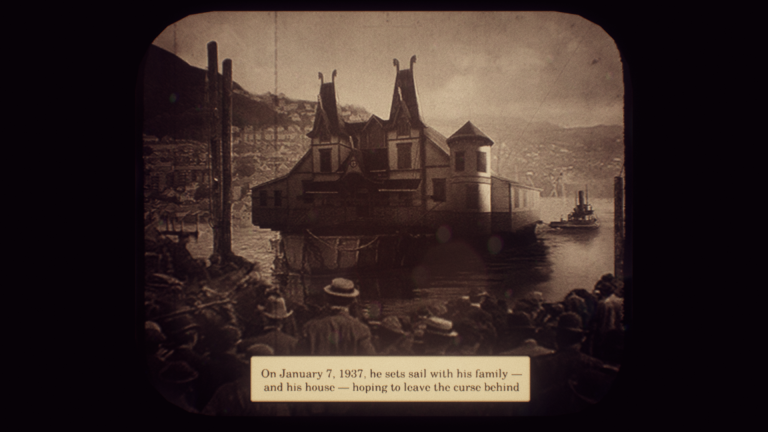
Each chronological chapter raises the question of whether the mythical Finch “curse” is real or an intergenerational cycle of severe neglect, as you discover that every tragedy may have been entirely avoidable.
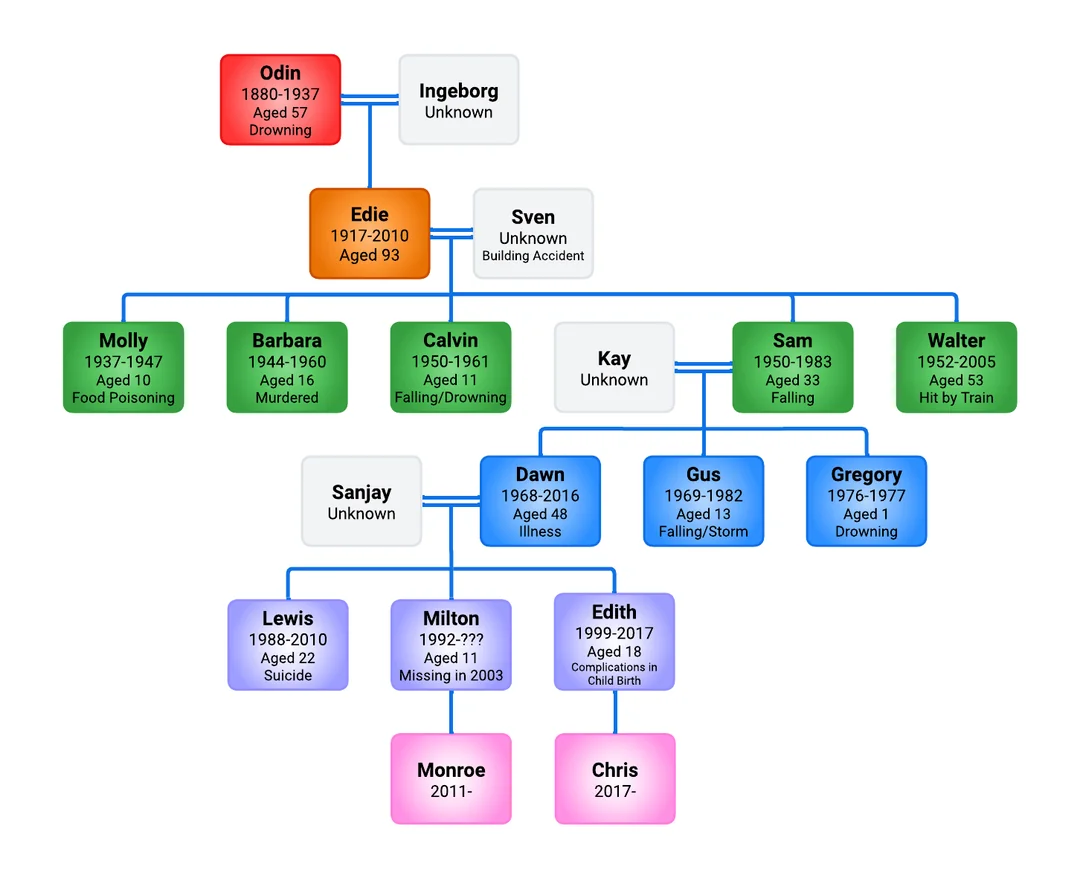
The 1947 cycle begins with 10-year-old Molly, who contracts fatal food poisoning after eating toxic toothpaste and berries by her bedroom window. This illness triggers a series of hallucinations where the player controls various predatory animals eating prey, mirroring Molly's desperate hunger as she passes away. The neglect accelerates in 1957 with her twin, Calvin. Forward and backward inputs operate a cliffside swing set with no parental supervision, forcing the player to build up to the moment where Calvin slips off, launching the child’s body into the abyss.
In 1960, 16-year-old Barbara was left home alone, transforming a brutal home invasion into a playable horror comic book. And the peak of negligence arrives in 1977 with baby Gregory; splashing with bath toys while unsupervised, he turns the faucet on and fills the tub to the brim, drowning himself.
The devastating, fan-favorite story takes place in 2010 with Lewis. Crushed by his family’s generational curse, Lewis suffers from severe clinical depression and maladaptive daydreaming, a form of psychological dissociation where he creates a fantasy world to escape his unbearable reality. This chapter resonates so deeply with players because it forces them to actively participate in his mental trauma through a “split-brain” gameplay layout.
Mechanically, your right hand mindlessly mimics Lewis’ repetitive factory work: grabbing a fish, dragging it to a blade, and chopping off its head on a conveyor belt. Simultaneously, your left hand navigates a maze in Lewis’ mind. As his imagination consumes him, the maze screen physically expands, growing from a tiny thought bubble to one that completely swallows the bleak fish cannery. It is a hauntingly accurate simulation of a mind splitting in two, operating a blade on autopilot while the soul drifts entirely away. Creative director Ian Dallas famously highlighted this scene in his 2018 GDC presentation to show how mechanical multitasking can mirror profound psychological trauma.
On December 4, 2010, exactly two weeks after Lewis’ suicide, Dawn catches Edie feeding the family’s lore to young Edith and shouts, “My children are dead because of your stories!” This interaction exposes the toxic cycle of mythologizing the Finch deaths; the family transformed Edie’s negligence and Dawn’s denial into an inescapable fate. By framing these preventable tragedies as a curse, the Finch adults avoid accountability.
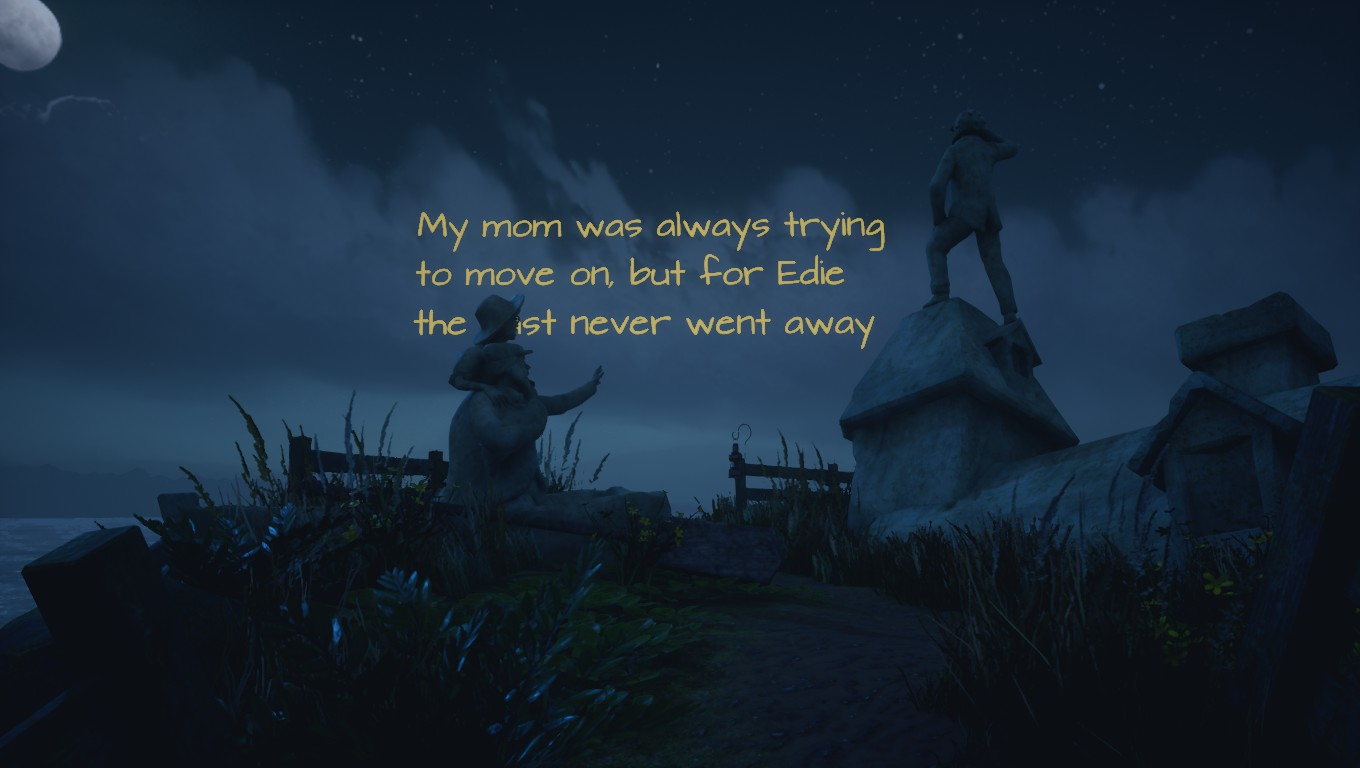
The last story pulls the player into an abstract, first-person birth canal, only to deliver a devastating twist: Edith died in childbirth, and the true narrator is her surviving teenage son, Christopher, standing over her grave. This can be read as presenting Edith’s death as another consequence of the family’s failure to act as an adequate support system.
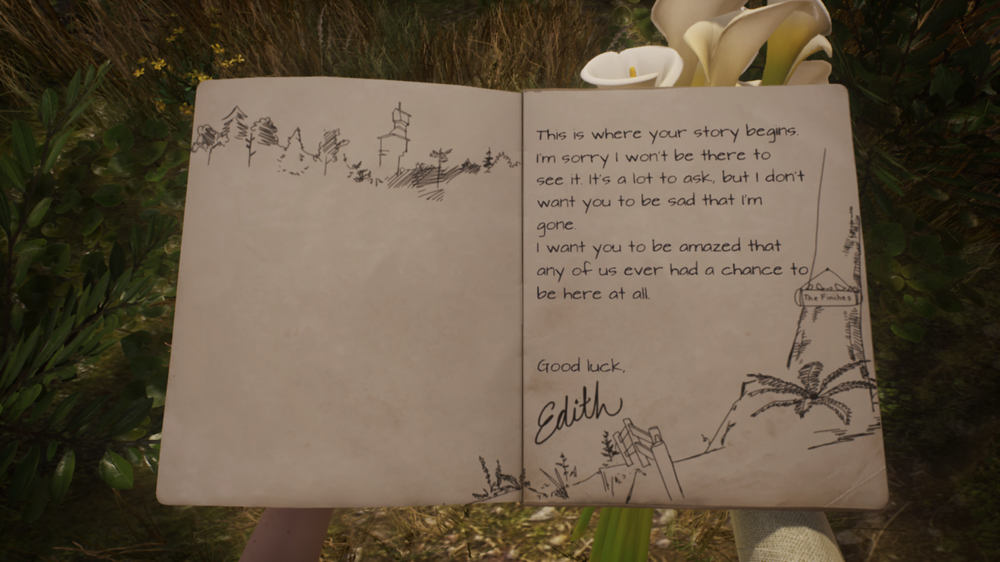
What Remains of Edith Finch exploits a core gaming paradox: it grants the player absolute mechanical control while stripping away all narrative agency. In most games, player input implies the power to intervene, fix a problem, or change the outcome. Edith Finch deliberately weaponizes this expectation. By locking the player into bleak, unalterable loops, the game transforms agency into a tool of emotional confrontation, forcing us to reexamine how we process grief, memory, and personal accountability.
This total inability to intervene shifts the game from a passive narrative about a family curse into an active simulation of powerlessness. Because you must conduct the final actions of these dying characters, you are denied the comfort of a detached viewer. You become an involuntary accomplice to an intergenerational cycle of neglect. This structural design forces you to confront the sobering reality of mistakes, parental absenteeism, and the toxic stories families construct to avoid accountability. Ultimately, playing What Remains of Edith Finch will teach you that no amount of altering the finality of death or rewriting our inherited history will help; we must find the courage to break the destructive narratives that keep us trapped in the past.
Read next

Our favorite cozy games (for now)
All the games I'm playing right now that center empathy, kindness, friendship, and satisfying gameplay.

Don’t rock the boat says trans girls are worth killing for
A must-play horror tale of transness and tentacles


Fire Emblem: Fortune's Weave's most unexpected pair is a fascinating tangle of sex and gender
"I could adopt the form of a woman so beautiful I would shine like the moon..."


Moonlight Peaks strikes just the right balance between cutesy and deep
It's unapologetically dramatic, it’s cute as hell (literally), and it has *magic*