

Shapes, not bodies: Queer readings of gaming's oldest avatars
In games like Adventure and Pac-Man, players were used to inhabiting bodies with far fewer defining features
In games like Adventure and Pac-Man, players were used to inhabiting bodies with far fewer defining features

We can marry whoever we like in Pelican Town, so why no they/them pronouns?

"I’m about to make a big life move away from my family into a completely different, opposite time zone..."

We can marry whoever we like in Pelican Town, so why no they/them pronouns?

Stardew Valley came out in February 2016 and my farmer made her move to Pelican Town not long after. That time was an age of naivete for me, when I didn't dare look at any game with a critical eye as a casual player. I didn't flinch at the binary gender selections in Stardew Valley's character creation screen. I also took for granted that, regardless of my player-character’s gender, I could romance and marry any dateable non-player character in the game, girl or boy.
Being new to games, even cozy ones, I failed to appreciate just how revolutionary the latter was at the time. A (mostly) all-ages game where two men can marry and adopt children, or a woman farmer can romance a quirky waitress or the town's resident mean girl? It seemed par for the course then. The real world was catching up to that reality fast, right? Why wouldn't it be so in a cozy video game, too?
Fast forward to today, and the queer inclusivity in Stardew Valley feels refreshingly matter-of-fact. It is an indelible part of its world. Same-sex couples are treated the same as heterosexual couples, and the dialogue and the story beats adapt accordingly. The choice of relationship has no influence on the game mechanics or progression; straight or queer, it's there for flavor, for roleplaying, and for the cozy vibes.
References to bigotry and homophobia, while there, are almost gentle: an NPC may have a line about not understanding such relationships, but then grow to accept them as they get to know the couple better.
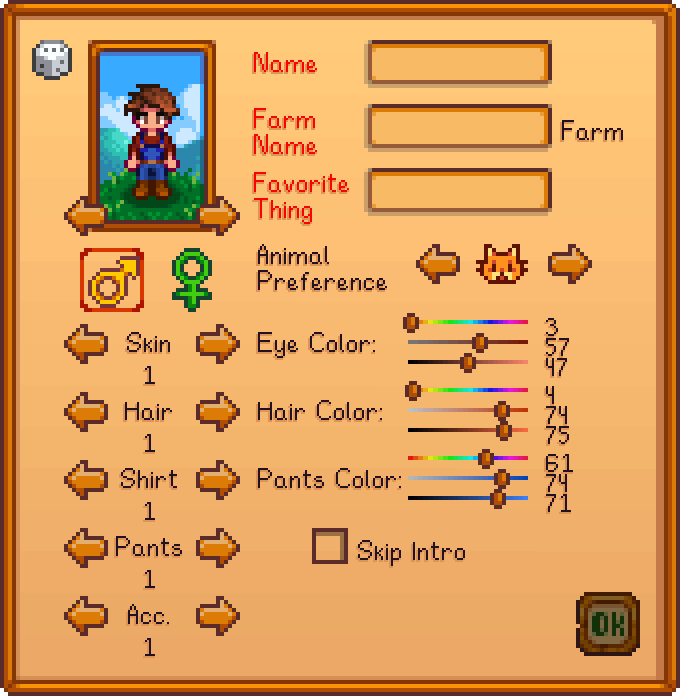
With such an approach to non-heteronormative romance options, it is all the more jarring how Stardew Valley treats sex and gender. It's right there in the beginning, in the form of a button denoted with the planetary symbols for Mars and Venus, a necessary step in character creation.

In games like Adventure and Pac-Man, players were used to inhabiting bodies with far fewer defining features

Developers of games like A Short Hike and Tiny Bookshop weigh in on why even labor feels nice in their games.


How Doki Doki Literature Club exposes dating sims as systems that punish female autonomy


How can a narrative point-and-click make my heart beat so fast?
