

Silent Hill was always feminist, Part 1: The cult, the witch, the burning girl
When horror speaks in code
When horror speaks in code

It's never too early to start training a baby gamer, right?

Gaming can be a very seductive way to self-medicate, or at least self-soothe

When horror speaks in code

In Silent Hill f, which was released in fall 2025, Konami explores the life of a teen girl in 1960s Japan pushing back against rigid gender norms and forced marriage; the game’s feminist themes are undeniable, even though the developers have never used the word “feminist” to describe it. This entry in the series, however, made those themes far more overt, and that explicitness alone was enough to ignite a wave of backlash.
A work doesn't need to explicitly declare itself feminist to function as a feminist critique of social norms, though. Furthermore, Silent Hill as a franchise has always had feminist themes, constructing its nightmares from the machinery of patriarchal violence, as well as including depictions of religion as a means of control over women's bodies and agency. The franchise has consistently centered female suffering under male dominance, maternal horror as punishment, and the corruption of female bodies by institutional power. Silent Hill f simply makes explicit what the series has been doing since 1999.
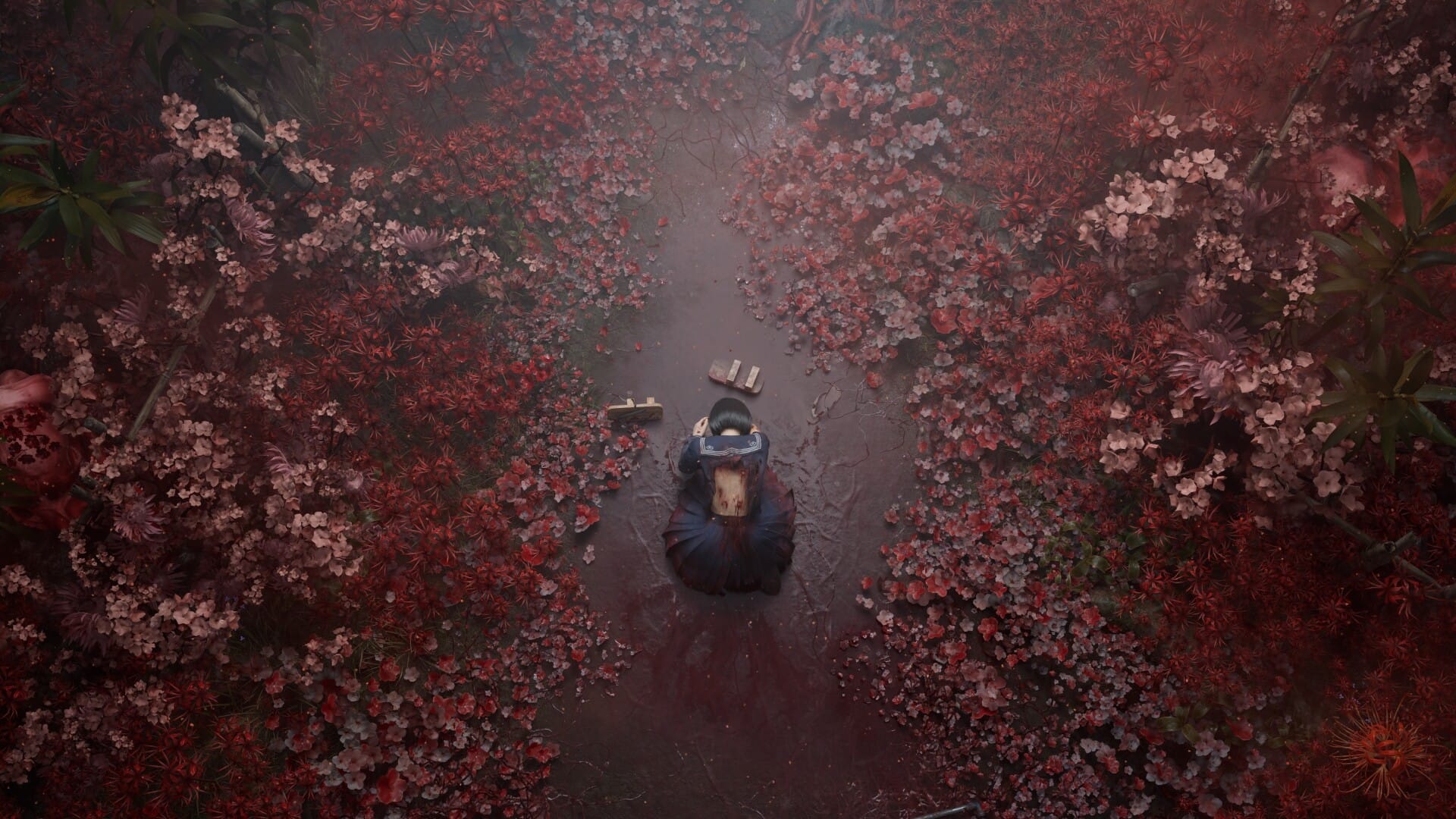
The backlash from misogynists against Silent Hill f proves the game succeeded in its critique — so effectively that portions of its audience spent 25 years experiencing feminist horror without recognizing it as such. The moment the subtext became text, the denial began.
It's worth unpacking who, exactly, is doing the complaining — because the backlash is not a monolith. The loudest voices seem to belong to people who have never played Silent Hill f, or any Silent Hill game at all; culture-war outrage rarely requires firsthand experience. Then there's a smaller, more baffling contingent: players who claim to have loved the series for decades yet somehow absorbed none of what it was actually saying — the dread of patriarchal control, the horror of lost bodily autonomy, the psychological weight of women crushed by expectation, across game after game.
And finally, there is the largest group, and probably the one most likely to be reading this: genuine Silent Hill fans who understood the themes all along, because the series was never particularly subtle if you were paying attention. For this audience — and it is, by all evidence, the majority — Silent Hill f is, in every sense, a continuation of everything the franchise has always been. And it has always been in conversation with feminist ideas; it simply trusted its audience to meet it there. Most did. The ones who didn't were always in the minority, and their shock at Silent Hill f says less about the game than about how successfully they tuned out everything that came before it.

Body shape shouldn't be a punchline either, by the way


In games like Adventure and Pac-Man, players were used to inhabiting bodies with far fewer defining features


We can marry whoever we like in Pelican Town, so why no they/them pronouns?


Developers of games like A Short Hike and Tiny Bookshop weigh in on why even labor feels nice in their games.
