

How do I get through my gaming backlog?
"I suspect this will be a common affliction among your readership, but my gaming backlog is quite extensive..."
"I suspect this will be a common affliction among your readership, but my gaming backlog is quite extensive..."

How a game that evokes history, rather than merely reproducing it, gets closer to a human truth

My childhood self could never have imagined a game where they got to create a character who was neither a man nor a woman

A story of the ways long-held traditions can still surprise us and reveal us to one another


My mother always loved a point-and-click game. I used to go into her room late at night and find her seated over her laptop, eerie music playing while she solved murder mysteries in strange castles or clockpunk Siberian factories, putting off the sleep she desperately needed as a working parent of four. As a child, I found it strange, perceiving that her sleeplessness might relate to the cyclone she became when she returned from work to our school things thrown around the kitchen, frustrated into fury. I wasn’t yet a mother who understood how tempting it was to enjoy the rare moment with yourself, even when it was at the expense of precious rest. I couldn’t have imagined that after I gave birth, we’d play one of these games together.
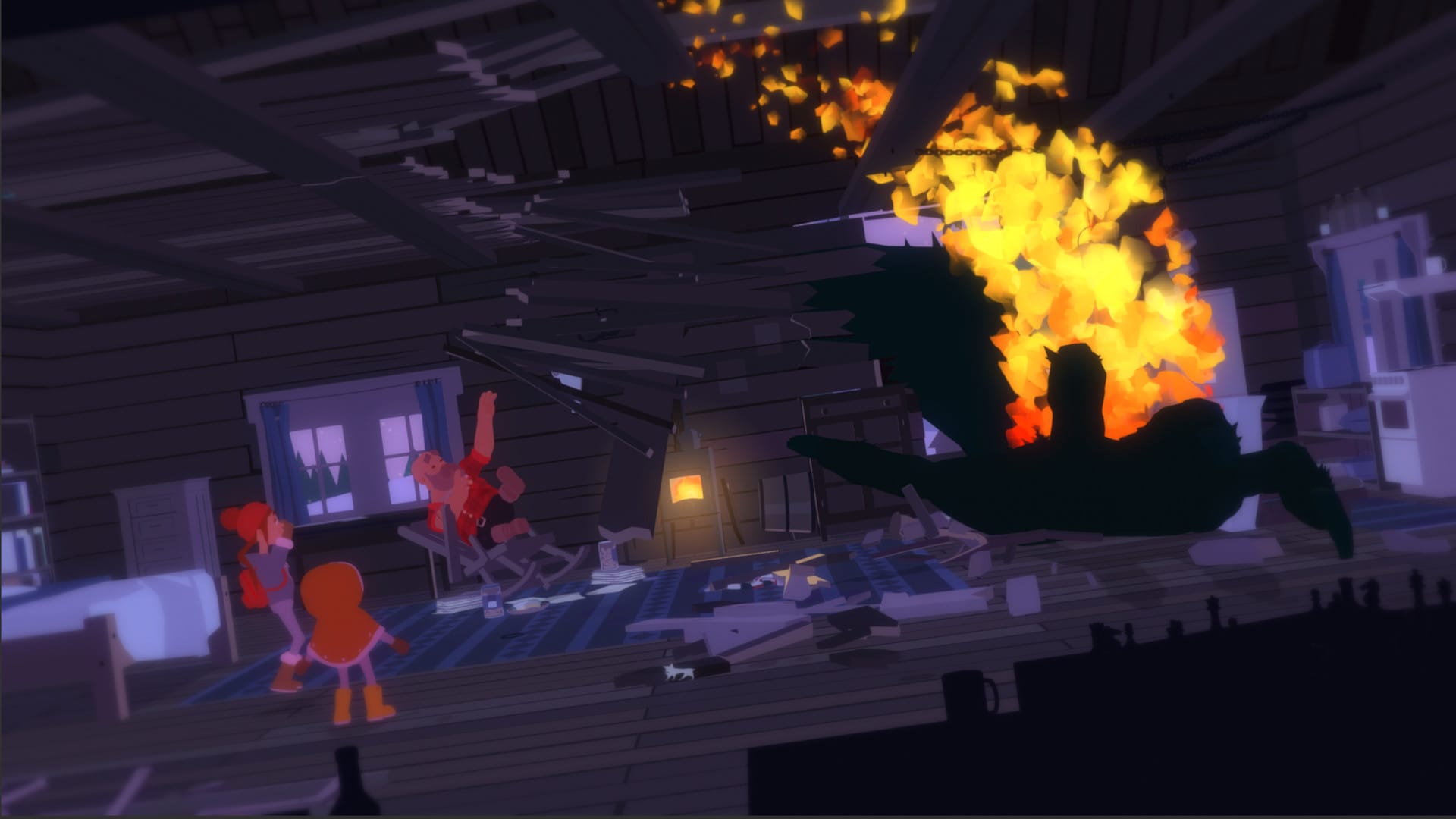
Röki is an award-winning, classic point-and-click that begins in a remote, Nordic wilderness. We play as a young girl named Tove who, after the death of her mother, takes care of her grief-stricken father, Henrik, and her younger brother, Lars. In the first scenes of the game, Henrik only sleeps, while Tove plays with Lars, makes him a simple dinner of eggs, and puts him to sleep. Lars is young but often speaks to the fairytale creatures he loves most in the stories Tove tells him—stories her mother, who died giving birth to Lars, once told her. Then, one such creature appears and abducts Lars, destroying their home and trapping Henrik beneath its fallen beams. When Henrik tells her to flee, Tove embarks on an adventure to bring Lars home, navigating a world beset by ravens, a world where wounds bubble to the surface, fungal, gooey, and raw with hurt and sadness.
At the same time as I knew I’d need her, I dreaded my mother coming to stay with me for the postpartum period. Ever a planner, I prepared earnestly with my spouse for the conflicts that so often beset our relationship.
“I just need you to know Ammi is very particular,” I told them. “More particular than me,” I said for emphasis, knowing how many of my own neuroses mirror her own.
Beset by the nesting impulse that so often comes in the last trimester of pregnancy, I’d plunged into a to-do list. But I was not thinking so much about the baby as I was about my mother, in whose voice I wrote the list of interventions I had to make in the apartment. Nothing was right, I told myself, scrubbing at the walls. The belly that protruded so far I could hardly bend over was no match for the shame I’d internalized and made my own.
But the mother I’d expected never came. Instead, three days before I went into labor, she arrived with a smile and complimented the ready natural light of our living space. She wasn’t worried about the lack of updates in the bathroom or the uneven paint on every doorway.
She asked, “Why don’t you have any good games on the PlayStation?”

My childhood self could never have imagined a game where they got to create a character who was neither a man nor a woman


A must-play horror tale of transness and tentacles


It's unapologetically dramatic, it’s cute as hell (literally), and it has *magic*

