

The House in Fata Morgana and what comes after
How a game that evokes history, rather than merely reproducing it, gets closer to a human truth
How a game that evokes history, rather than merely reproducing it, gets closer to a human truth

My childhood self could never have imagined a game where they got to create a character who was neither a man nor a woman

How a game that evokes history, rather than merely reproducing it, gets closer to a human truth

Close to where I grew up in Scotland, there once existed a tourist attraction. It was known as the Archeolink and was advertised as a living history park. There were interactive displays on Pictish history and mythology, recreations of Iron Age farms and homes, and live shows with period-authentic props and costumes. There was a theatre which, almost dementedly, looped the same short film of two Mesolithic children dying slowly and miserably, somewhere in the prehistory cold and dark. I must have watched it about seven or eight times as a kid.
The Archeolink’s intention was to bring us closer to history, to "link" us to some long-occluded past. Here, it seemed to declare, is where history begins.
Yet, despite all the effort and the genuine enthusiasm of the staff and the performers, I always felt a disconnect between who I was in each moment I visited and the past I was told should matter to me. In 2011, the park closed, and its fate was abandonment. Fenced off, dilapidated, its overgrown land seemingly perpetually on the market. The following year, the visual novel The House in Fata Morgana was released in Japan. I didn’t play it until a few years later when it was released in English. When I did, I discovered that its strange and ethereal conception of history affected me so much more than the Archeolink ever did. The House in Fata Morgana does not begin with interactive displays or recreated Iron Age farms.
It begins with You.
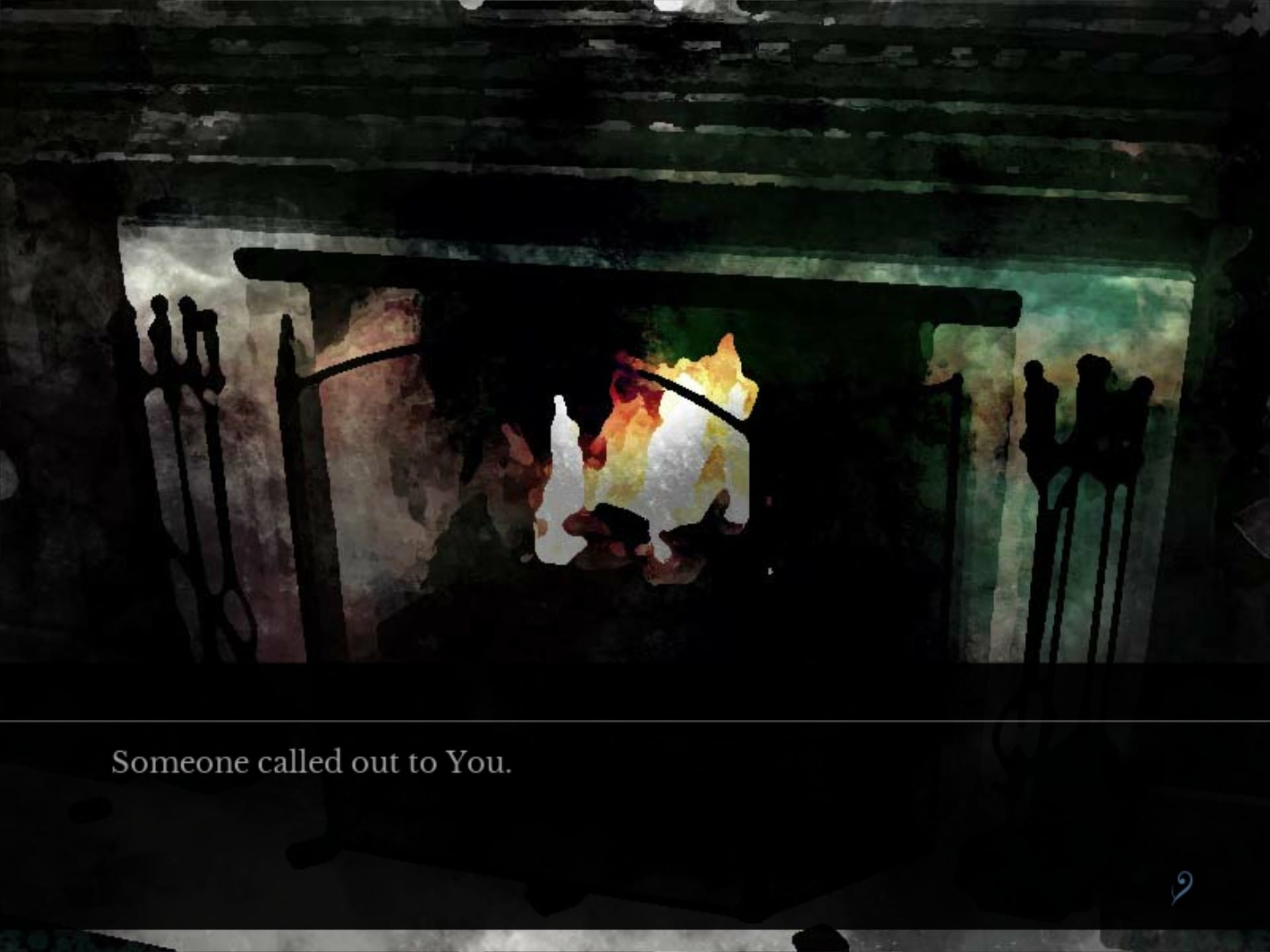
What You are told, upon awakening in a decaying mansion, is this: ‘‘Without realizing it, You instinctively accept as Truth the events unfolding before You.” In front of You, there is only a dying fire and a maid, who claims she will tell you the history of the mansion. In doing so, she promises You will find Yourself again. The Maid brings You to four doors, each one illuminating a period of the house’s existence. In 1603, the revelation of an incestuous love affair ruins a young, wealthy family. In 1707, a monster is rehabilitated by a woman, before the story spirals into inevitable bloodshed. In 1869, a husband abuses and neglects his wife until she eventually flees, leaving him wandering the earth in pursuit of her. Finally, in 1099, two lonely outsiders fall in love at the mansion, before they are killed by a mob of villagers. In each story, both the maid and a strange white-haired girl reoccur, either never aging or endlessly reincarnating. In each story, at least as told, the possibility of love ultimately succumbs to violence. Each story, You instinctively accept as truth.


All the games I'm playing right now that center empathy, kindness, friendship, and satisfying gameplay.


A must-play horror tale of transness and tentacles


"I could adopt the form of a woman so beautiful I would shine like the moon..."

