

How do I get through my gaming backlog?
"I suspect this will be a common affliction among your readership, but my gaming backlog is quite extensive..."
"I suspect this will be a common affliction among your readership, but my gaming backlog is quite extensive..."

How a game that evokes history, rather than merely reproducing it, gets closer to a human truth

My childhood self could never have imagined a game where they got to create a character who was neither a man nor a woman

Maelle's decision represents her own understanding of what her life is worth — and it accounts for the worth of the many lives in Lumière


My name is Dr. McWilliams. I am an early-career practicing psychiatrist and clinical educator at the University of Wisconsin-Madison, where I help train medical students and psychiatry residents. Gaming is my side gig, and I am always looking for ways to blend these two interests.
[Editor's note: This article contains full story spoilers for Clair Obscur: Expedition 33.]
When Clair Obscur: Expedition 33 placed its final choice in front of me, I hesitated. As a practicing psychiatrist, I am well-versed in assisting with processing and managing grief and loss. I am also familiar with the psychological cost of refusing to accept reality.
This is a story about a family of painters who have the fantastical power to create worlds inside their canvases. As the game progresses, it is revealed that the world of Expedition 33 is in a canvas created by Verso, the family's son, who died in a fire, and that Maelle is actually his sister Alicia, reborn as Maelle in the canvas. The death and destruction on the canvas, and therefore in its world, result from conflict within the grieving family — the mother hiding in the painting to live with a recreated version of her son, and the father trying to erase the painting to force her out, with Alicia caught in the middle.
The painted Verso, a soul exhausted by an existence prolonged by a grieving family's refusal to let go, wants the canvas destroyed. Alicia, who has come to love her new life as Maelle more than the life awaiting her outside the canvas, wishes to stay.
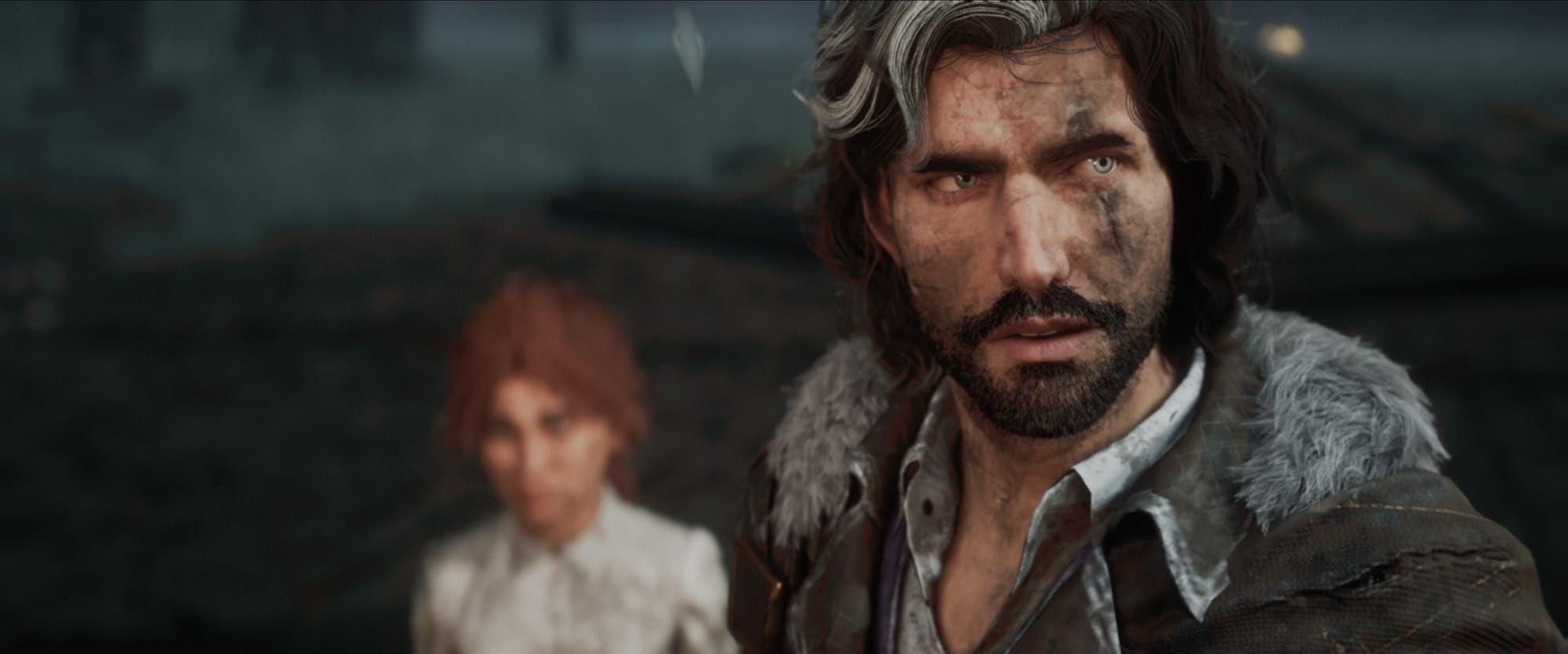
Verso’s wish — destroy the canvas, confront the truth, and move forward — is the pathway I guide patients towards nearly every week in my practice. It is, by almost every measure, the healthy choice.
And yet, I chose Maelle – a decision I still think about months later.
The general consensus on the ending of Expedition 33 largely frames the final choice as a conflict between emotional health and avoidance — accepting loss or hiding from it. Verso represents the product of unregulated and out-of-control grief. Maelle represents denial, clinginess, and maladaptive reassurance. Under this framework, siding with Maelle is essentially choosing a beautiful lie over a difficult truth.
I think this framework is incomplete and ignores a large piece of the game’s plot: autonomy.

How a game that evokes history, rather than merely reproducing it, gets closer to a human truth


A must-play horror tale of transness and tentacles


"I could adopt the form of a woman so beautiful I would shine like the moon..."

