

Control Resonant and inheriting male violence
Dylan never wanted strength, nor asked for any of this
Dylan never wanted strength, nor asked for any of this
The satirical simulation of urban sprawl is tapping into a deeply repressed instinct to engage in rent-seeking behavior

Roberta Williams' 1995 horror game is a creepy miracle

Dylan never wanted strength, nor asked for any of this

Dylan Faden is a far more feared protagonist than his sister Jesse was in Control. Everywhere he goes, people look at him and see “P6,” the Federal Bureau of Control asset that was taken by the Hiss and killed countless people. They see the director’s strange brother, who still carries the Hiss in him, and who could become a risk at any moment if he gets too close to a Hedron. The combat in Control Resonant is more up close, visceral, and blunt than its predecessor’s: Dylan screams as he slams into his enemies, as if the sheer violence of battle is exhausting or upsetting to him. To the FBC, Dylan is, at best, a weapon. At worst? A liability. They go as far as to assign him a full-time handler and attach a device to his neck that can disable or even kill him if needed.
Despite all of this, there’s a gentleness to Dylan. A little of that timidness he had as a boy, hiding behind his big sister, comes out as he marvels over the softness of a dog’s fur, or speaks in a quiet, restrained voice. He seems to hold onto this tenderness with white knuckles after having been told for so long that he was both too dangerous… and not dangerous enough.
“The first act of violence that patriarchy demands of males is not violence toward women. Instead patriarchy demands of all males that they engage in acts of psychic self-mutilation, that they kill off the emotional parts of themselves. If an individual is not successful in emotionally crippling himself, he can count on patriarchal men to enact rituals of power that will assault his self-esteem.”
— bell hooks, The Will To Change: Men, Masculinity, and Love (2004)
[Editor's note: The rest of this article contains full story spoilers for Control Resonant. This includes descriptions of child abuse and suicide ideation.]
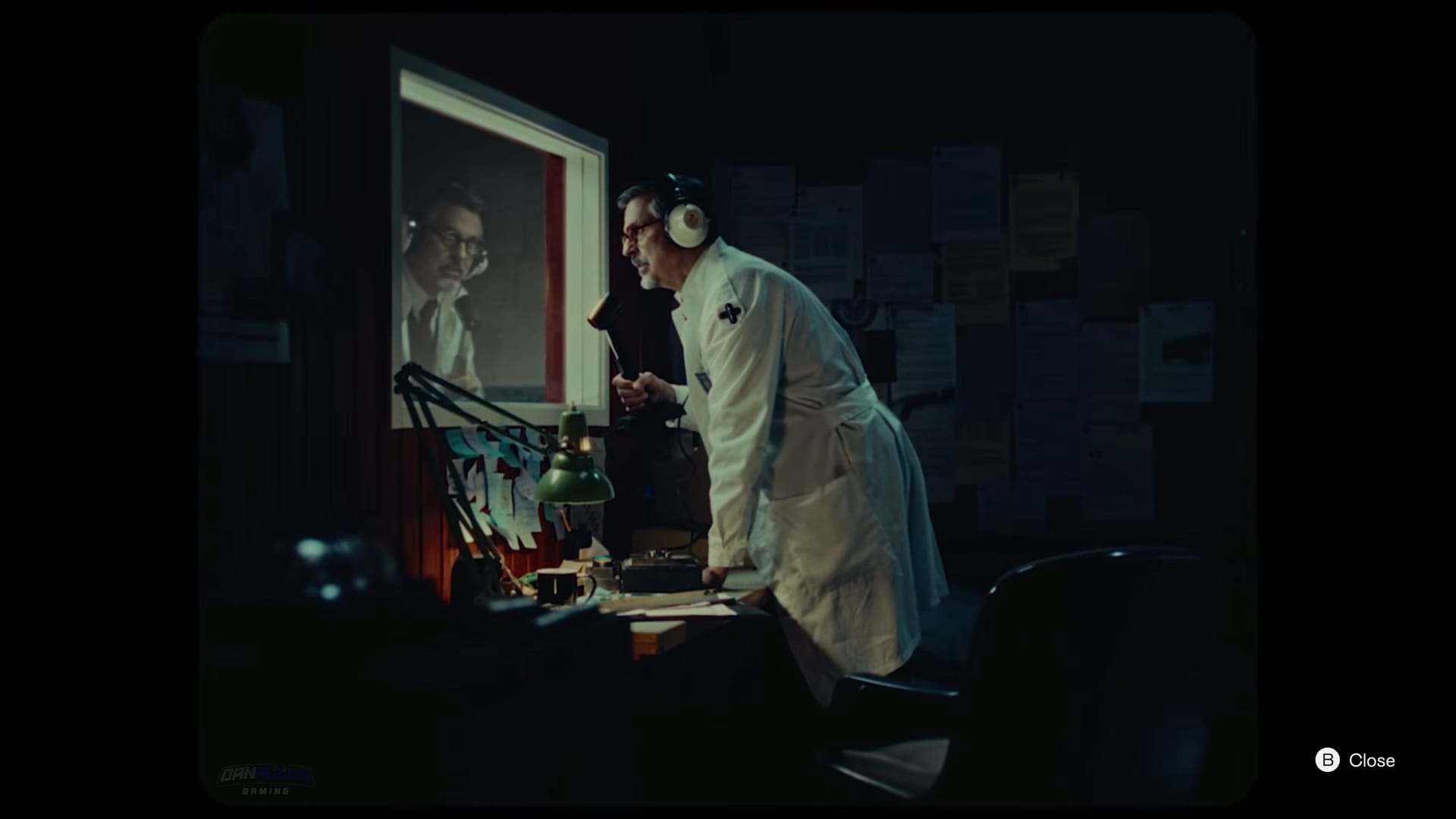
Dr. Casper Darling, FBC Head of Research, is limited in imagination but not ambition. He admits at the end of the game that he put “all of [his] end-of-the-world-deterrence eggs in one basket” when he found Dylan, a young boy with powers that Darling believed he could groom to become the next leader of the Bureau. Director Trench was showing signs of Hiss possession, and Darling had no other plans for how to fix it than to push Dylan into that role. Having been raised by a “disciplinarian” himself, Darling knew no other way to raise a boy than to push him, hurt him. He swears in one tape that he turned out fine being raised this way, but later casually celebrates his father’s death, and eventually realizes he never wanted to be like his dad. Darling may have survived his father’s treatment of him, but he didn’t escape it, and now the cycle repeats.

The satirical simulation of urban sprawl is tapping into a deeply repressed instinct to engage in rent-seeking behavior

How a game that evokes history, rather than merely reproducing it, gets closer to a human truth


A must-play horror tale of transness and tentacles

